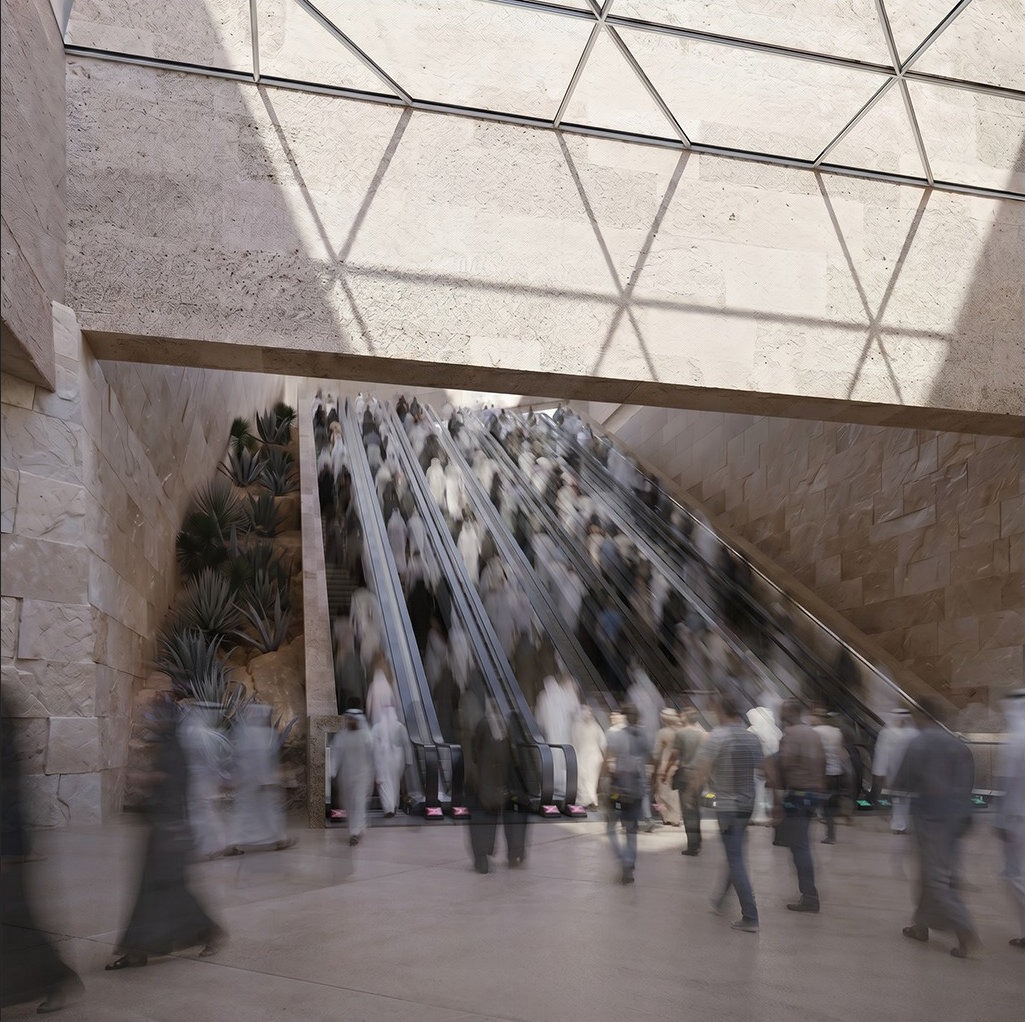
When a visual reference becomes a method
A visual reference becomes truly useful when it is no longer just an image to be reproduced. In architectural visualization, references are often used to define an atmosphere, a lighting condition, a material quality, or a framing. They help establish a shared language and make it possible to express in a few images what a long discourse sometimes struggles to convey. But some references go further: they do not only propose an aesthetic, they suggest a method.
A recent competition for a metro station in Saudi Arabia reminded us of this.
The space was monumental, frontal, and highly geometric. Large escalators structured the composition. We wanted to introduce a human presence without weakening the abstract strength of the architecture.
Simply adding characters would have produced an overly descriptive image. What we were looking for instead was a crowd perceived as a flow rather than a sum of individuals.
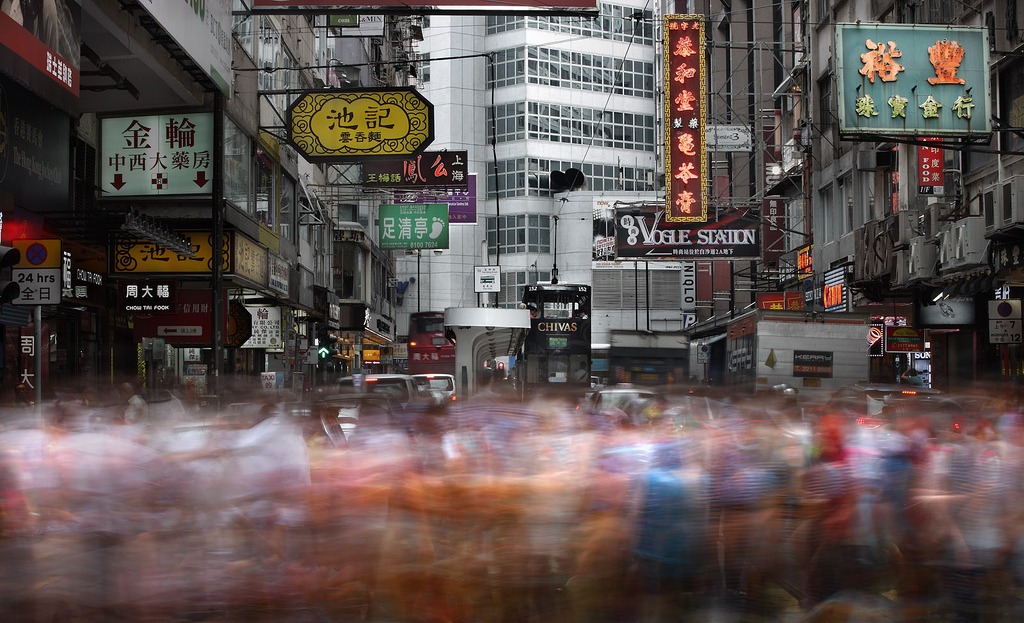
A street photograph by Brian Yen, taken in Hong Kong, gave us an initial intuition. Passersby, captured in motion, become a nearly liquid, colorful matter, while the architecture remains still.
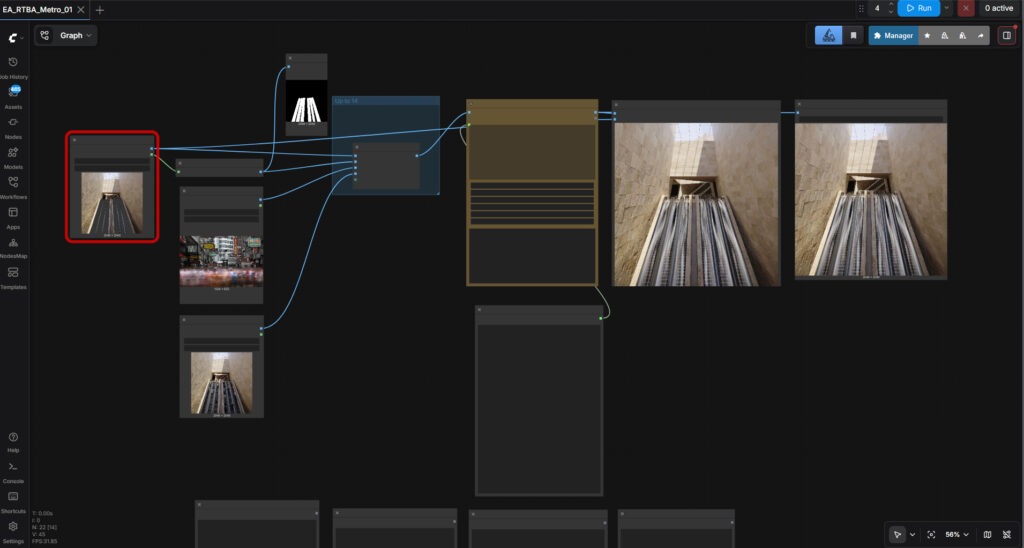
We tried to reproduce this effect using NanoBanana. The results were convincing, but the figures remained too identifiable. We needed to preserve a degree of indeterminacy.
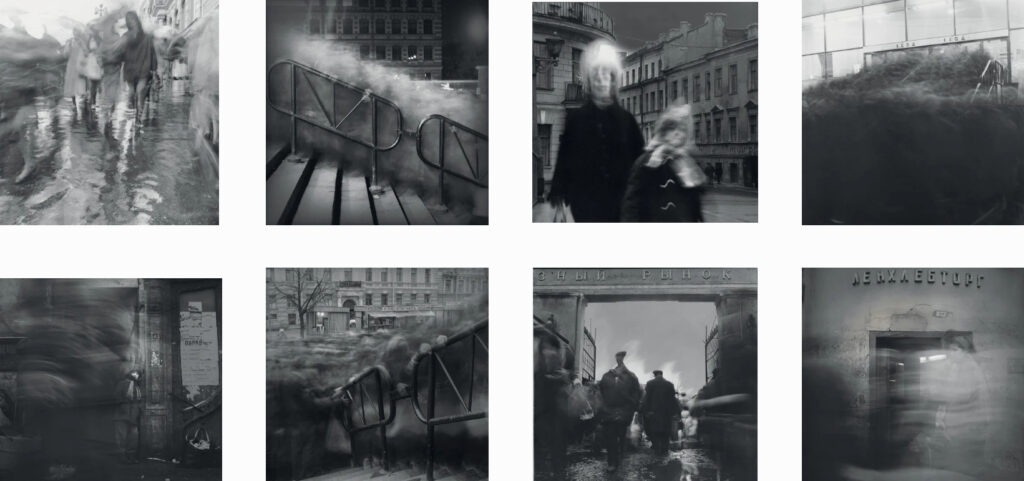
The series City of Shadows by Alexey Titarenko helped us refine this intention. In these photographs, crowds become traces, flows, almost ghost-like presences, while the built environment remains stable.
The decisive solution, however, came from a much more distant reference. In her work on Namibian desert elephants, Anne-Marie Étienne superimposes several shots of the same animal. Through transparency, the subject remains visible while appearing to dissolve into the landscape.
The subject had no direct connection to our project. Yet the method responded exactly to our problem.
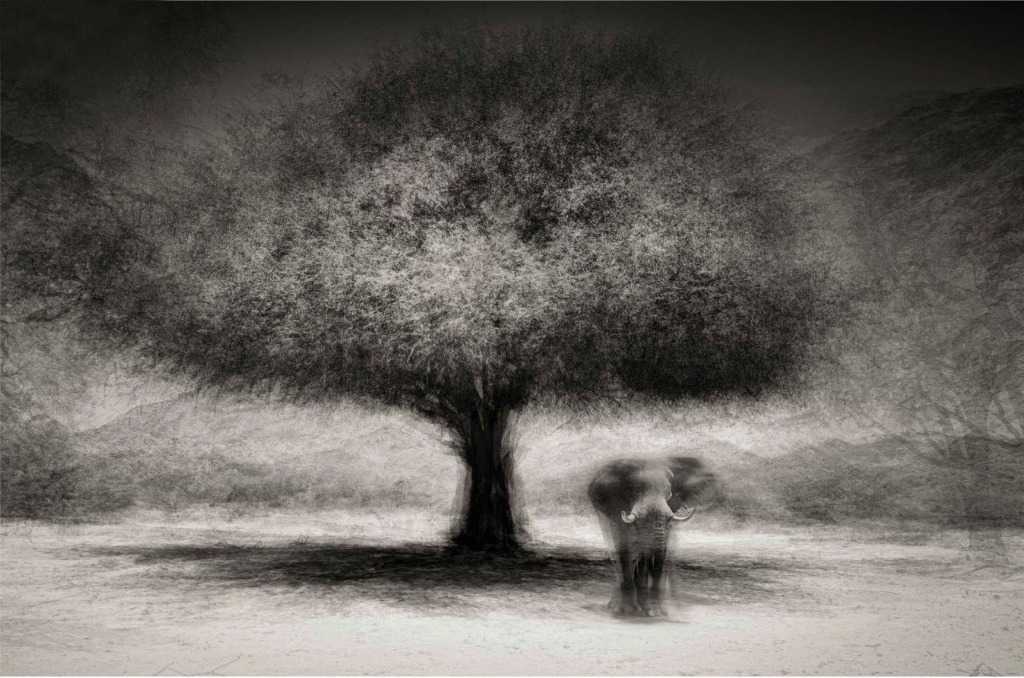
We applied this principle in Photoshop. The various AI-generated iterations became raw material that we layered, adjusted, and made more or less transparent until we achieved a collective presence strong enough to suggest the use of the space, while remaining abstract enough not to distract from the architecture.
The reference was therefore not copied; it was understood and then transposed. This is perhaps the moment when a corpus truly becomes a design tool. It is no longer about accumulating inspiring images, but about building an active memory in which certain images remain not only for their beauty, but also because they contain a solution that may only be recognized years later.
In this project, artificial intelligence opened up directions, and Photoshop allowed us to recombine material. But the final answer came from visual culture itself: the ability to recognize, in an image seemingly unrelated to the subject, a method capable of solving a design problem.